
'For the first time ever it has come below 1 per cent, at 0.97 per cent.'

'Investment creates capacity and reduces inflation. Income, employment, and savings rise.'

'The stabilisation of interest rates followed by reduction is going to happen over the next year.'

The new scheme may be announced before the Lok Sabha elections.

The bottom lines of several private sector banks have taken a hit following the recent guidelines released by the Reserve Bank of India (RBI) on alternate investment fund (AIF) investments. Last month, the RBI announced that regulated entities, such as banks, non-bank lenders, and home financiers, cannot invest in AIFs that have directly or indirectly invested in companies that have borrowed money from the lenders. In case an entity had already made such an investment, they must liquidate the investment or make 100 per cent provision, RBI had said.

Funds raised by India Inc. through offshore loan syndication hit a 15-year high in 2023 with companies and banks raising $21.4 billion, the highest since 2007. The momentum is expected to continue in 2024 as well with over $4 billion fund raising expected in the first three months of this year. Companies raise funds, both onshore and offshore, depending on interest rates and activities. Funds raised offshore can be deployed in overseas activities.

The Reserve Bank of India (RBI) has updated Know Your Customer (KYC) norms for politically exposed persons (PEPs) who transact with regulated entities (REs), seeking to comply with the recommendations of intergovernmental organisation Financial Action Task Force (FATF). PEPs are individuals entrusted with prominent public functions by a foreign country, including the heads of states/governments, senior politicians, senior government or judicial or military officers, senior executives of state-owned corporations and important political party officials, said the RBI. This change is expected to provide more clarity to undertake Customer Due Diligence (CDD), said the RBI in a communication to REs.

'We have a plan to plough back a 'This year in the first half we had profits of more than Rs 31,000 crore.' significant amount of profits this financial year.' 'We have seen this organic plough back of profit is one of best ways to support the equity of the bank.'

All six members of the Reserve Bank of India's (RBI's) monetary policy committee (MPC) expressed caution over food inflation during the December review, while two external members warned about high real interest rates as headline inflation approaches its target of 4 per cent. The central bank continued to maintain the status quo on both the repo rate and the stance in the December monetary policy. India's retail inflation in November rose to 5.5 per cent - its fastest pace in three months - due to higher food prices.

We are, therefore, setting up more branches in more tertiary terms, like tier 2 and tier 3 terms. Going forward, that is where the growth will come.

Fundraising through qualified institutional placement (QIP) has revived this year, led by commercial banks, after a lacklustre 2022. According to data compiled by Prime Database, Indian companies have raised Rs 53,070 crore in 2023 so far, of which seven banks - Union Bank of India, Indian Bank, Bank of India, Federal Bank, IDFC First Bank, Bank of Maharashtra, and J&K Bank - account for Rs 21,290 crore, or about 40 per cent. If other financial institutions are included, the figure surges to Rs 26,690 crore.

'We are committed to achieving the targets we had outlined.'
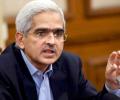
Reserve Bank of India (RBI) Governor Shaktikanta Das had stumped the market in the previous two policies - in August and in October - first with action and then with words. In August, it was the introduction of an incremental cash reserve ratio (I-CRR) to take out excess liquidity, which took the markets by surprise. In October, there was no action. Rather, what is known as "open mouth operation", Das' comment that the central bank might conduct open market operations (OMOs) by selling bonds tempered the euphoria in the bond markets after JP Morgan's inclusion of India in its Emerging Market Bond Index.

'We started affordable housing loans that has good traction and the books have grown to Rs 750 crore as of the end of last quarter.'

The Union finance ministry will meet CEOs of public sector banks to discuss issues related to cybersecurity in the wake of the Rs 820 crore (Rs 8.2 billion) fraud that hit Kolkata-based UCO Bank last month.

Between March 2022 and September 2023, HDFC Bank added 56,310 employees.

'Pandemic has triggered interest and awareness among the people about the need for healthcare.'

'We are focused on playing on our strengths, which are technology, and building a large profitable business by working with banks as well as non-banks and NBFCs for loans.'

Sashidhar Jagdishan, managing director and chief executive officer of HDFC Bank, the largest private-sector lender of the country, has just completed his first term. The period October 2020-October 2023 was a roller coaster, and the second one, which started on October 27, could be more interesting as the lender absorbs the impact of the merger of HDFC, which was integrated on July 1, and moves to the next growth phase. Soon after he took over the reins from Aditya Puri on October 27, 2020, the Reserve Bank of India (RBI) debarred HDFC Bank from enrolling new credit card customers and launching new products under the Digital 2.0 programme due to repeated outages on its mobile-banking and internet-banking platforms.

In a move to strengthen governance in private sector banks and wholly-owned subsidiaries of foreign banks, the Reserve Bank of India (RBI) on Wednesday directed them to have at least two wholetime directors. Lenders that do not meet the requirement will have to submit the names for the RBI's approval within four months. Banks need prior approval from the banking regulator for the appointment of wholetime directors.
 © 2026 Rediff.com - Investor Information - Advertise with us - Disclaimer - Privacy Policy - Sitemap - Feedback - About us - Terms of use - Grievances